

What is a Workspace?
A Workspace in Blame is the primary boundary for managing collaboration, code intelligence, repositories, and billing. Workspaces keep team assets isolated and ensure your AI assistant, wiki knowledge bases, code reviews, and integrations operate within the exact context of your team or project.Core Capabilities
- Repository Context & Indexing: Connect GitHub repositories and grant workspace-level indexing for pull requests, chats, and automated wikis.
- Team Collaboration & RBAC: Invite teammates with dedicated roles (
Owner,Admin,Member) and control invite permissions. - Shared AI Knowledge & Memory: Maintain workspace-level memory, rules, custom instructions, and architecture wikis accessible to all members.
- Centralized Billing & Usage: Manage subscriptions, seat allocations, token quotas, and aggregated credit usage across the team.
Workspace Hierarchy & Scoping
Blame uses an organizational hierarchy to isolate permissions, data, and access:Key Scoped Resources
Workspace Roles & Permissions
Every member in a workspace is assigned a role that determines their administrative capabilities:Members can only invite new users if the Allow Member Invites toggle is turned on in Workspace Settings.
Switching Between Workspaces
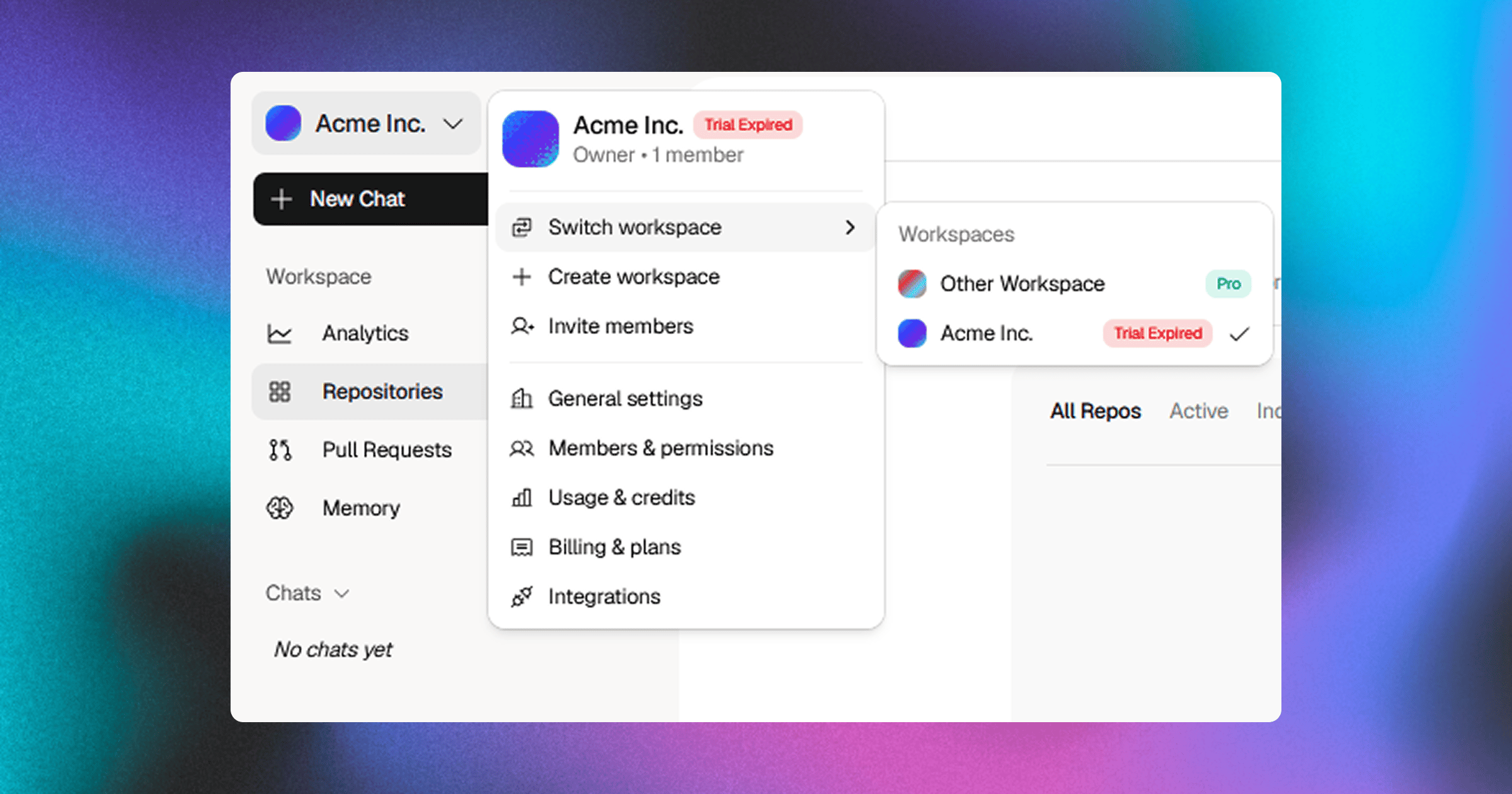
- Open the Workspace Switcher: Click the workspace selector dropdown in the top-left corner of the sidebar navigation.
- Select Target Workspace: Click on any workspace in the list. Your current view, active repositories, chat history, and permissions will immediately switch context.
- Create a New Workspace: To create an additional isolated environment, click Create Workspace from the dropdown menu, provide a name, and complete setup.
Next Steps
- Workspace Settings — Learn how to customize workspace names, logos, invite defaults, transfer ownership, or delete workspaces.
- Managing Members — Invite team members, assign RBAC roles, and manage pending invites.